Dev Diary #6: Coat of Arms Deep Dive
Explore medieval heraldry, coats of arms, and the historical research bringing authenticity to Chronicles: Medieval.
Introduction
In the previous update, we talked about the in-game original score and how the sound of Chronicles: Medieval is being brought to life. In this update, we will dive into one of the areas we put the most effort into for historical research: heraldry and coats of arms.
One of Chronicles: Medieval's design pillars is historical plausibility, and it matters especially for Coats of Arms. We mentioned on numerous occasions that we are working with experts for input on various aspects of the game. For coats of arms, we took it a step further. We reached out to the College of Arms, the heraldic authority for England, Wales, and Northern Ireland. It grants arms, conducts genealogical research, and maintains official registers of national symbols like flags.
So, buckle up and be warned - this update is going to be a nerdy one.
College of Arms and our dedication to historical plausibility
While our game setting predates the College's foundation in 1484 (Chapter I starts in the year AD 1313), they still have a vast collection of relevant records. We are also fortunate that one of the Officers of the College of Arms, Adam Tuck, Lancaster Herald, took on our unusual request with enthusiasm, and he's an avid gamer at heart. Adam has poured over historical records of coats of arms to ensure our artists and designers can recreate and assign historically plausible coats of arms to many historical characters in Chronicles: Medieval.
So what did the research entail? In the fourteenth and fifteenth centuries, national identity in the modern sense did not really exist. People did not think of themselves as French, English, or German the way a modern citizen thinks of nationality. They thought of themselves as belonging to a particular lord, region, town, etc. In this period, overlapping personal bonds between nobles and monarchs defined the political world, not nation-states, and heraldry was the one way to make those bonds visible.
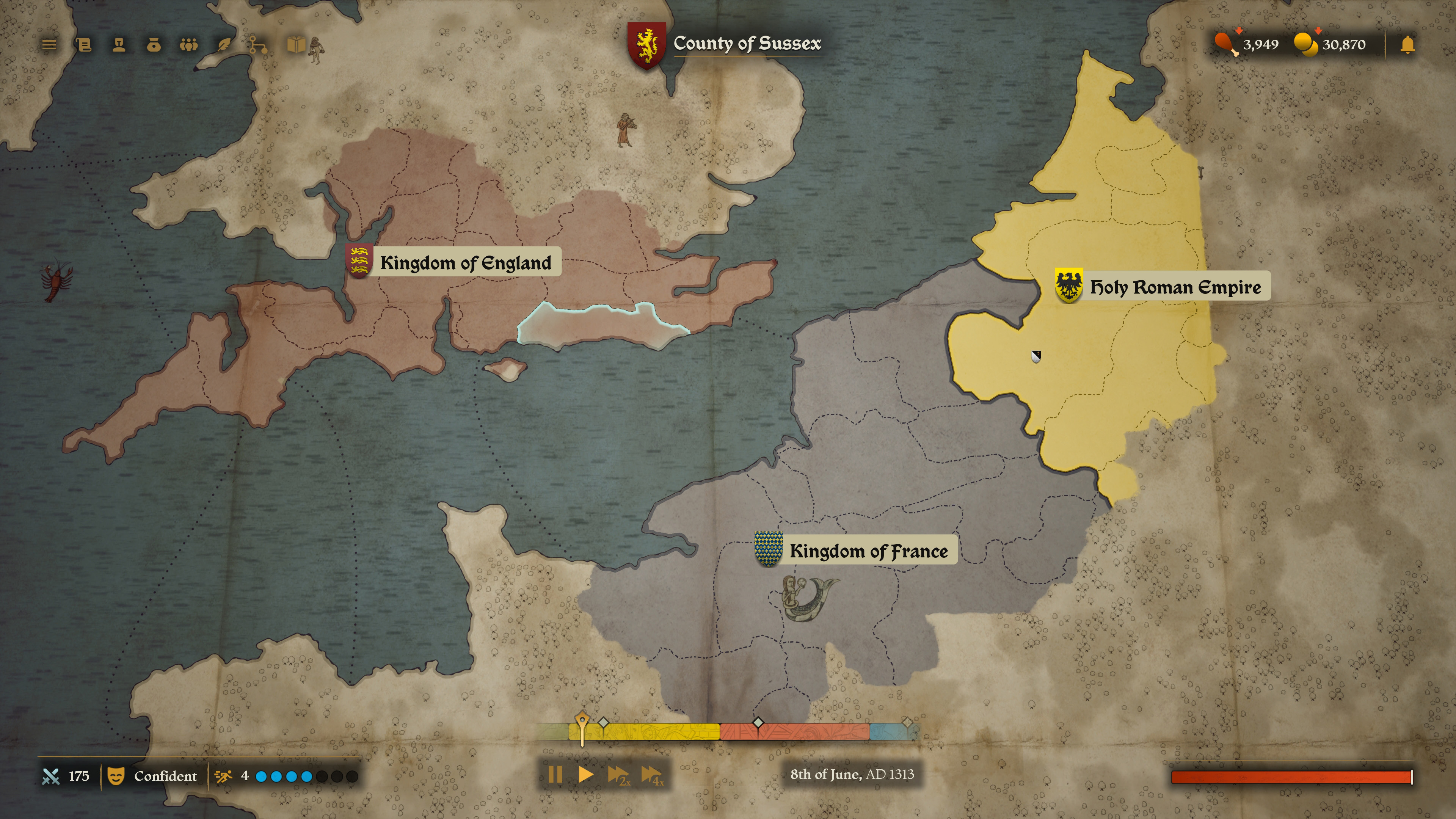
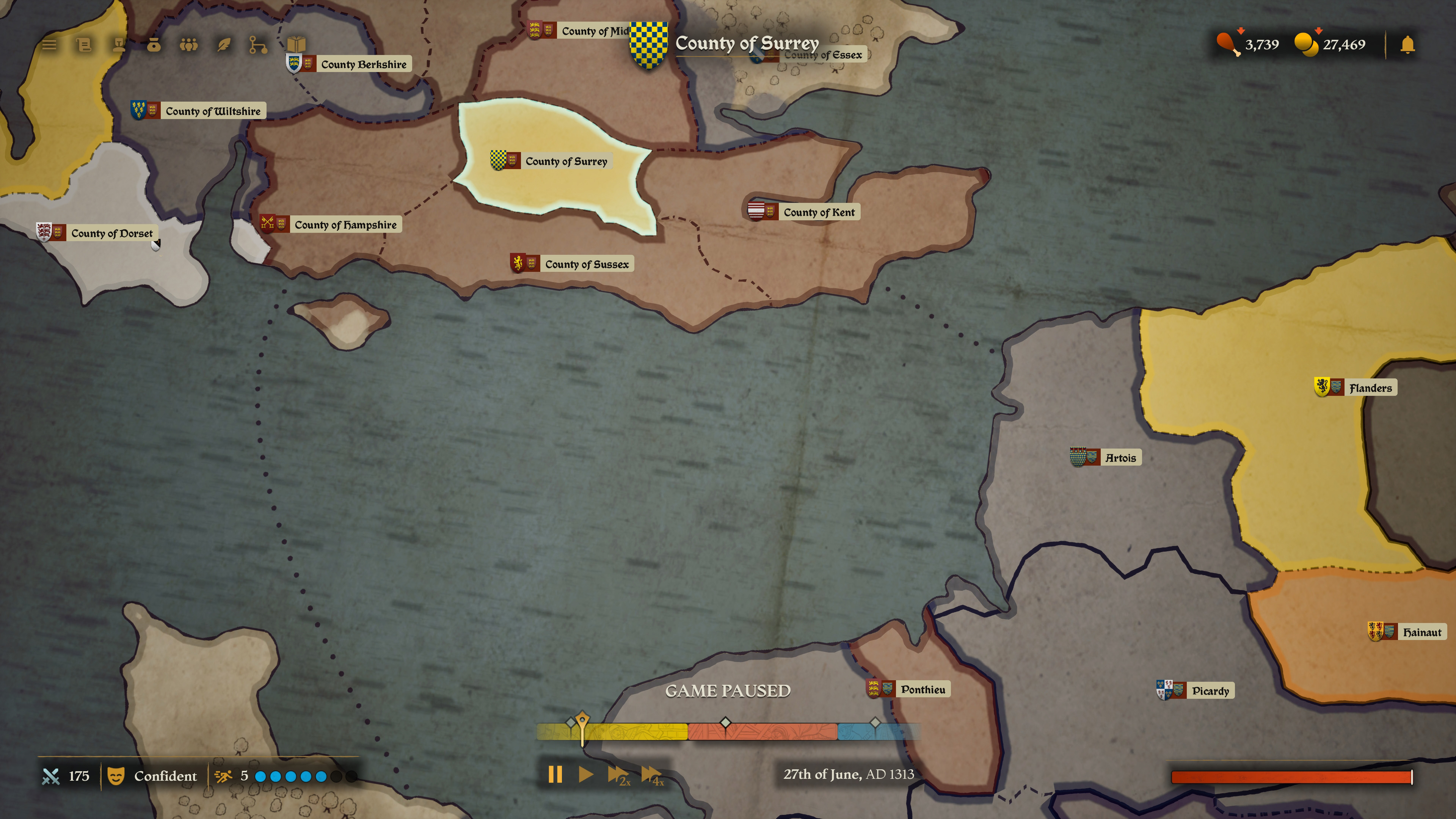
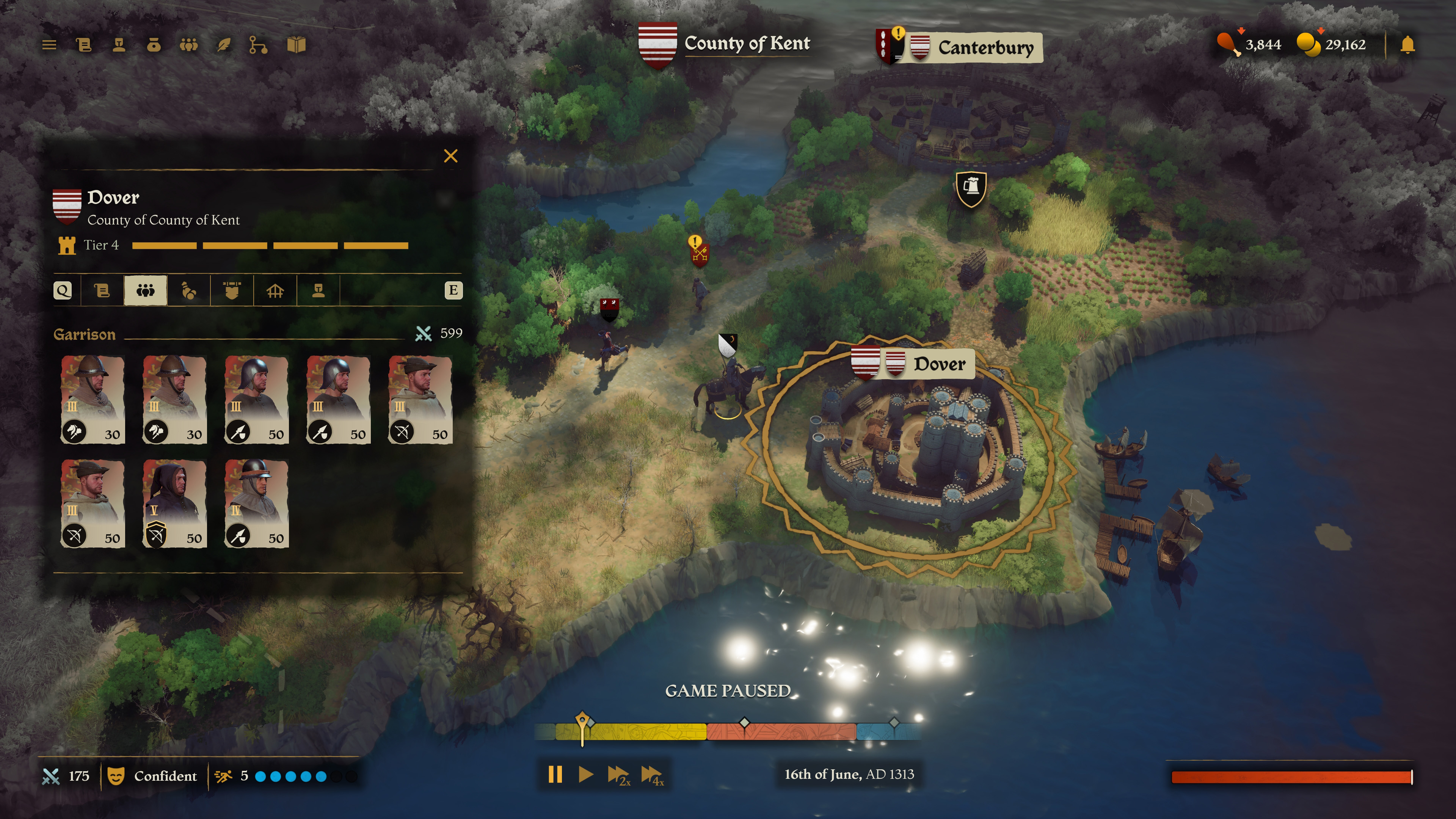
Thanks to Adam Tuck's work, most of the coats of arms borne by English nobles of our period in the game match what those families actually carried. Most of the French and HRE are aimed to land at a similar level of accuracy. We researched rolls of arms, seals, tomb monuments, and other surviving heraldic records of the period. Where the record is incomplete or contested, we made plausible reconstructions consistent with what we know of the family, the region, and the period. Here are a couple of examples of what to expect at Early Access launch:
What actually is a coat of arms?
At its heart, a Coat of Arms is the design painted on a shield - it’s what passes from father to son, what gets stamped on seals and embroidered on surcoats, and what would have identified its bearer to anyone who knew how to read it.
The shield has two parts: a field (the background), and one or more charges placed on it. The field can be a single color or divided in various ways, and the charges can be almost anything, although certain shapes recur constantly throughout the medieval period. A lion. An eagle. A cross. Fleur-de-lis. A horizontal band across the middle of the shield. A diagonal stripe from one corner to the other. The vocabulary is large but finite, and a medieval herald could read any properly designed Coat of Arms the same way as we read internet memes.
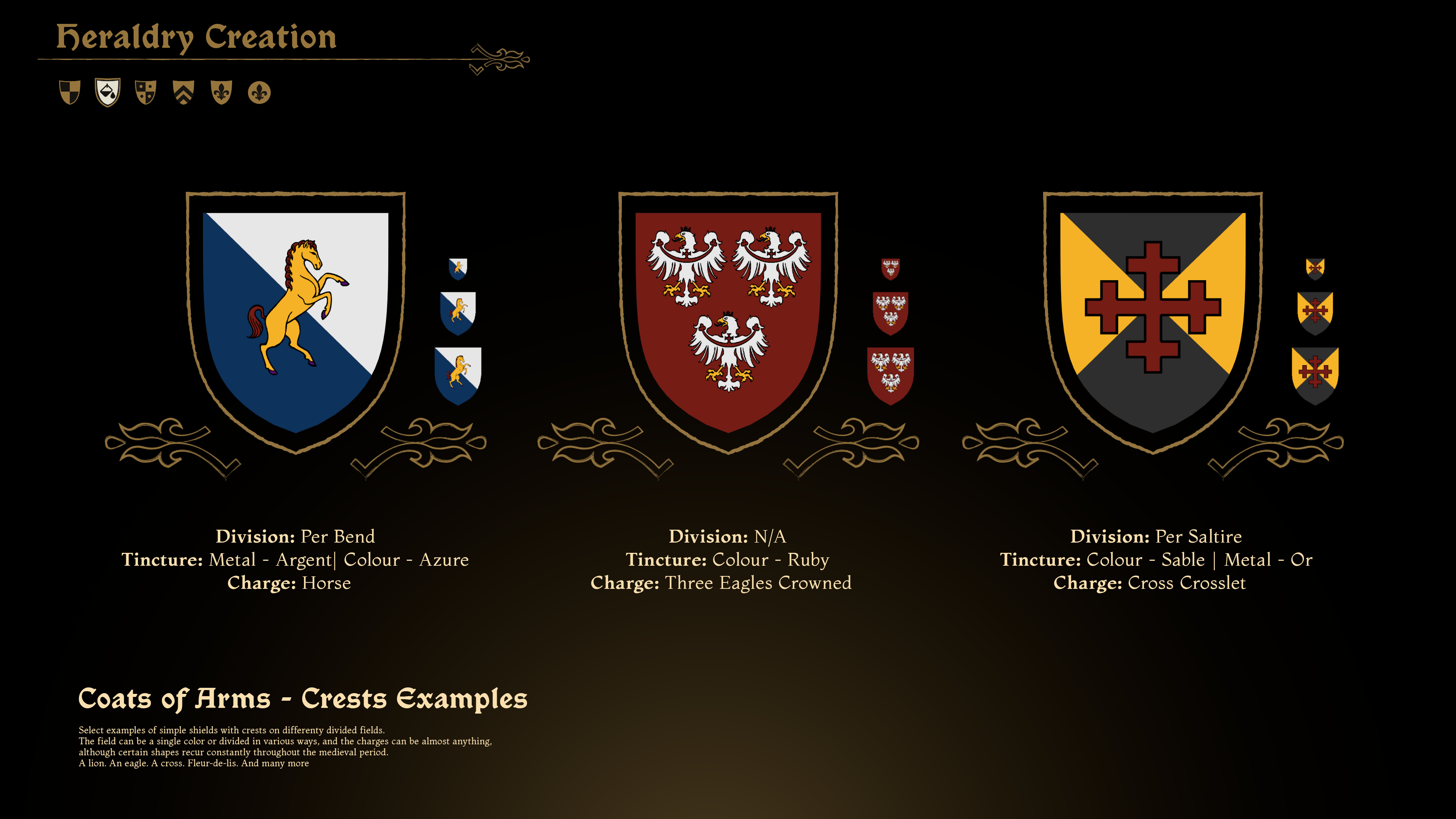
The colors used are also restricted, and not by accident. Medieval heraldry uses two metals, gold and silver, normally painted yellow and white, and five colors, red, blue, black, green, and purple, plus a small family of patterned furs. It also includes patterns like chequy, striped, etc. Specific rules govern how these can be combined. For example, metal may not be placed on metal, and color may not be placed on color. This is called the rule of tincture, and it exists for purely practical reasons. A red lion on a blue field is hard to see at any distance. A red lion on a gold field jumps out at the eye. Heraldry was designed to be readable across a battlefield, in poor light or through dust and smoke, and the rule of tincture is the medieval insight that contrast matters more than color preference.
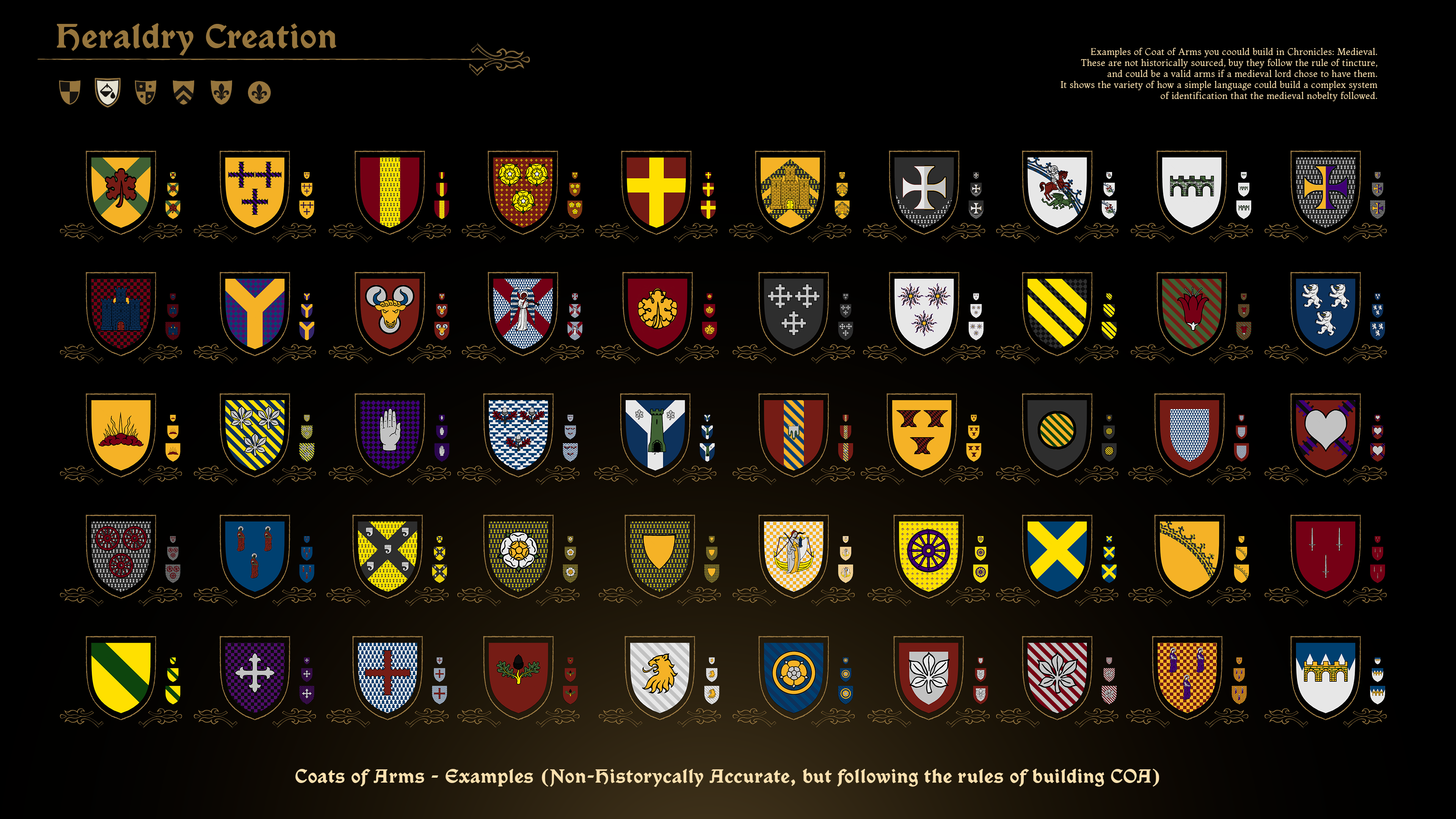
One more thing about describing Coats of Arms might feel a bit archaic nowadays, but it’s extremely efficient once you learn the basics (we warned you this one will be nerdy). The medieval language for describing arms is blazon, a precise way to put a Coat of Arms into words, with vocabulary borrowed from medieval French. That is why you will see words like gules for red, azure for blue, or sable for black.
A blazon follows a specific order: first, it describes the background, then the symbols placed on it. It also tells us how those symbols are positioned. For example, passant means walking, while guardant means looking directly at the viewer. Take the arms of England, for example: gules, three lions passant guardant Or. In plain English, that's three gold lions walking across a red background, looking directly at the viewer.
Efficient, isn’t it? Now, how we actually use all that information in-game, and how you can use it to express yourself during your playthrough, let’s talk about our Coat of Arms designer feature.
Coat of Arms designers - all of our learnings applied
When you start your first playthrough and create a character in Chronicles: Medieval, you are, simply speaking, a nobody. You may have ambitions, but you have not yet earned the right to carry your own Coat of Arms. At first, the game will automatically assign you a starting Coat of Arms, a single-color shield with nothing on it. This is the heraldic equivalent of arriving at court in a clean but plain coat. You are dressed, but you are not dressed as anyone.
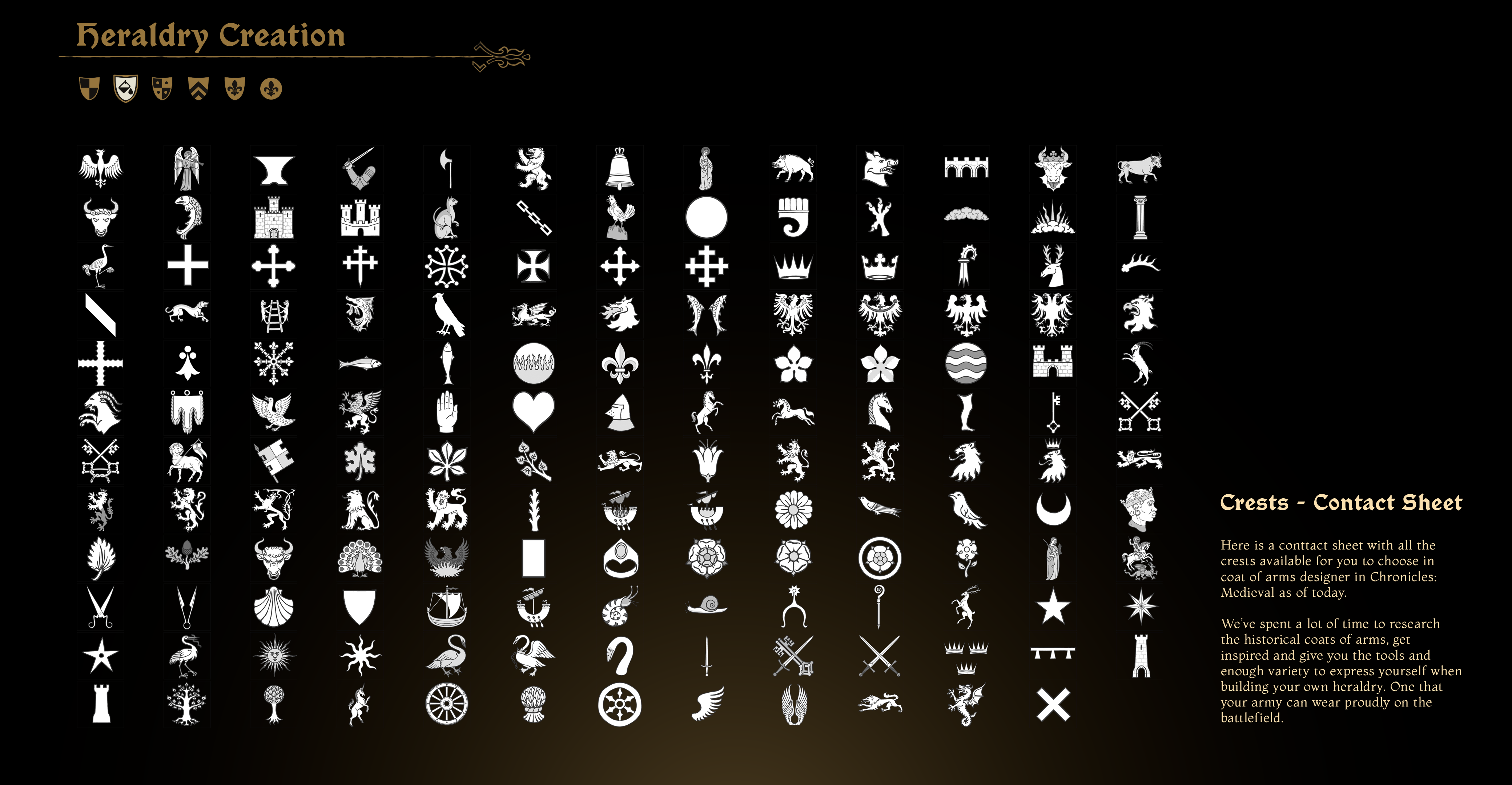
The simple colored shield will be visible on the exploration map alongside your player pawn. But let’s be honest, that is no fun. Everyone wants to express themselves and visualize their persona in some way. That is why we designed a bespoke Coat of Arms designer to give you all the tools to create your own arms. Guard-railed by rules and historically sourced, every creation feels authentic. The user experience and ease of use of the designer is something that we’re still working on, yet all the functionalities are already there.
But first, you need to earn some respect before you can proudly wear your own Coat of Arms. As you play the game and perform various actions (finishing quests, winning battles etc.), you will start to accumulate renown. Once you collect enough, you can visit heralds in any major settlement. They are your access point to designing your own Coat of Arms - for a fee, of course, as heralds need to make a living as well.
The herald will guide you through designing your own Coat of Arms from the ground up. The design itself is your choice, within the rules of the tradition. We are giving you a curated set of tinctures and charges to choose from, broad enough to support an enormous variety of designs but constrained enough that whatever you produce will read as a genuine medieval coat rather than as something invented yesterday.
Our focus has been on getting the historical research and the underlying references right, so that what ships in the base game is a historically plausible foundation. But we’re already thinking beyond Early Access, and you can expect more options to be available here in the future. Because one of our game pillars is mod support, we built the Coat of Arms system to be flexible and easy to extend.
Where do the coats of arms manifest in-game?
We use the Coat of Arms for both players and NPCs in several places.
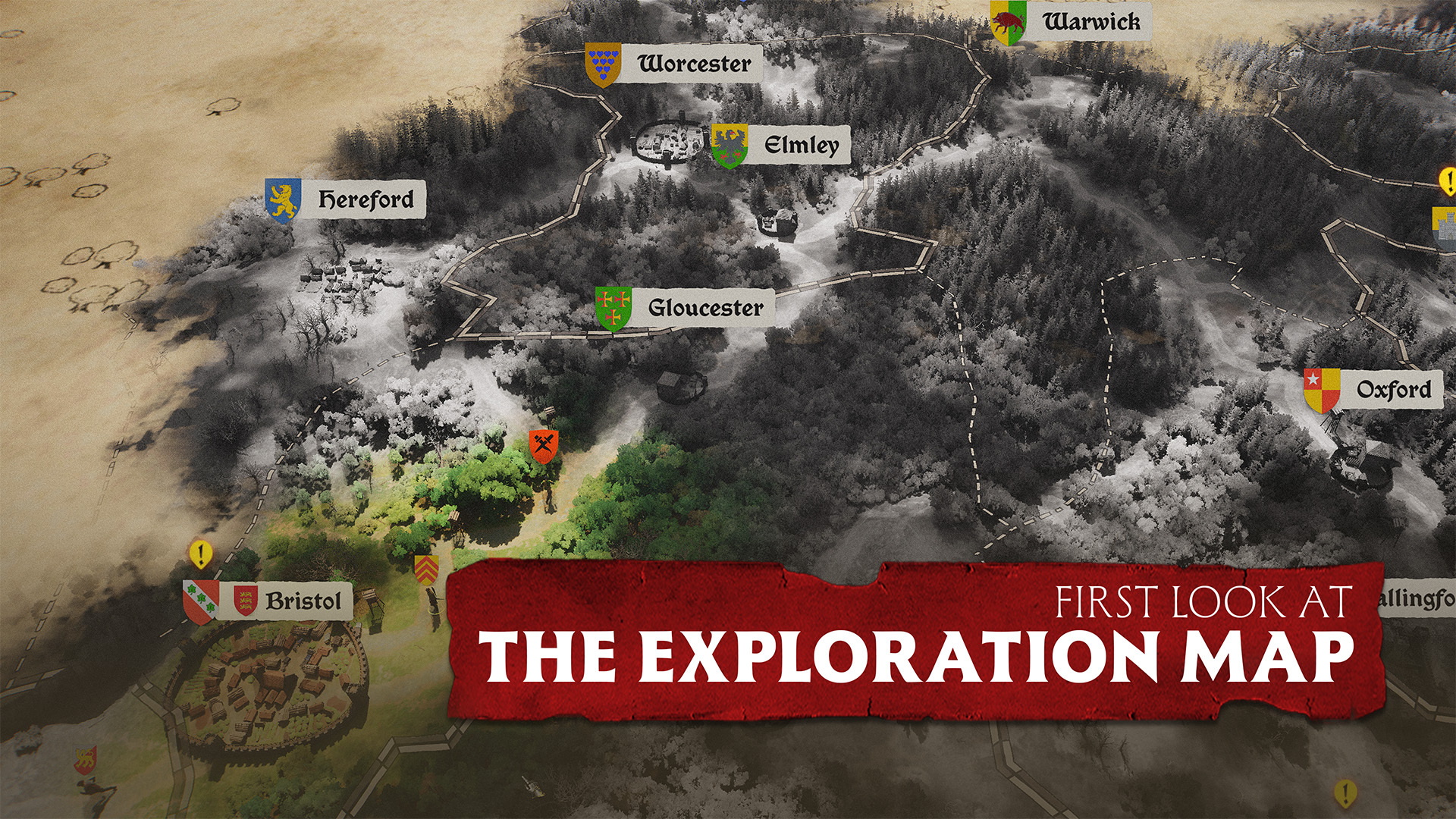
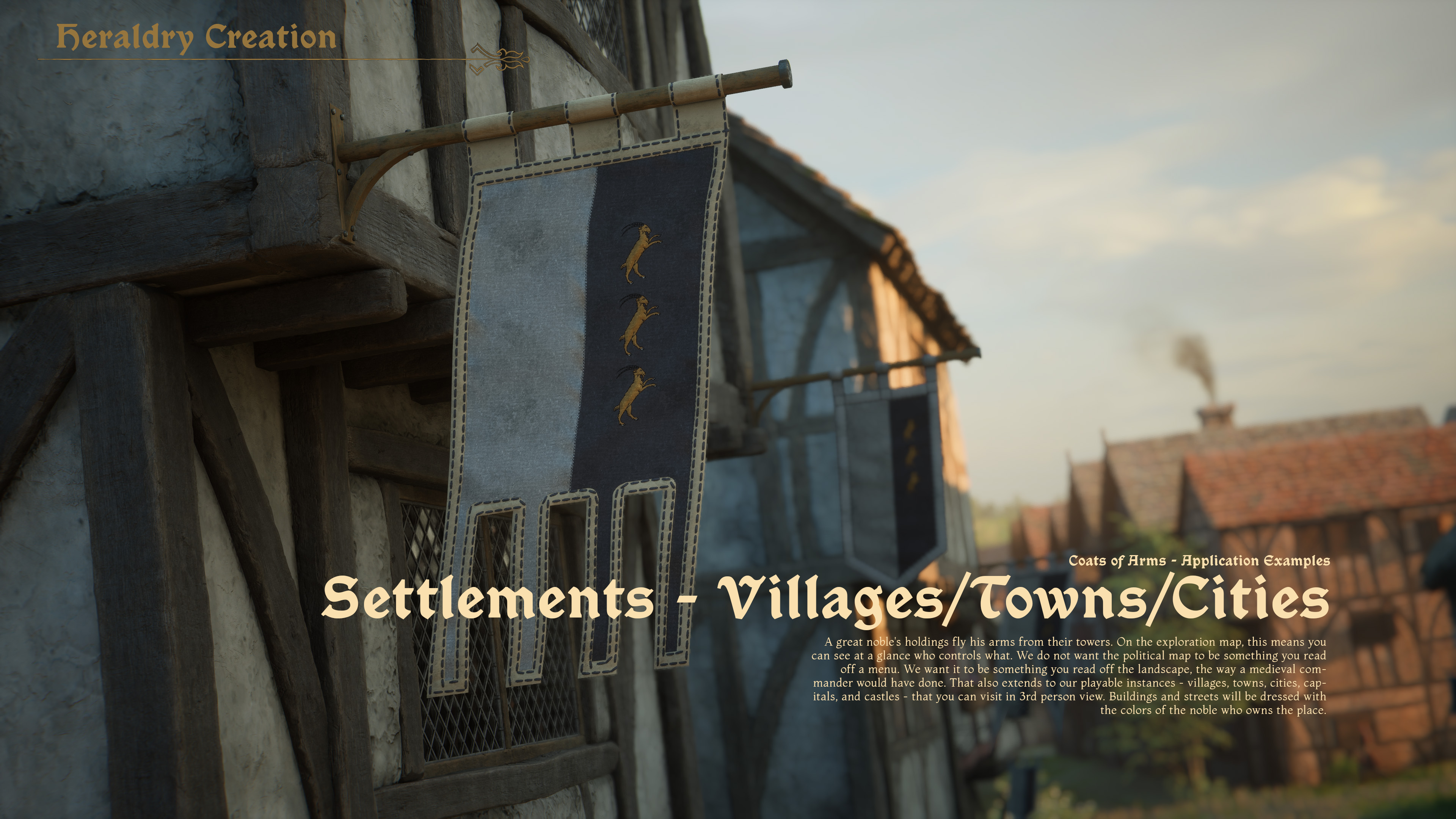
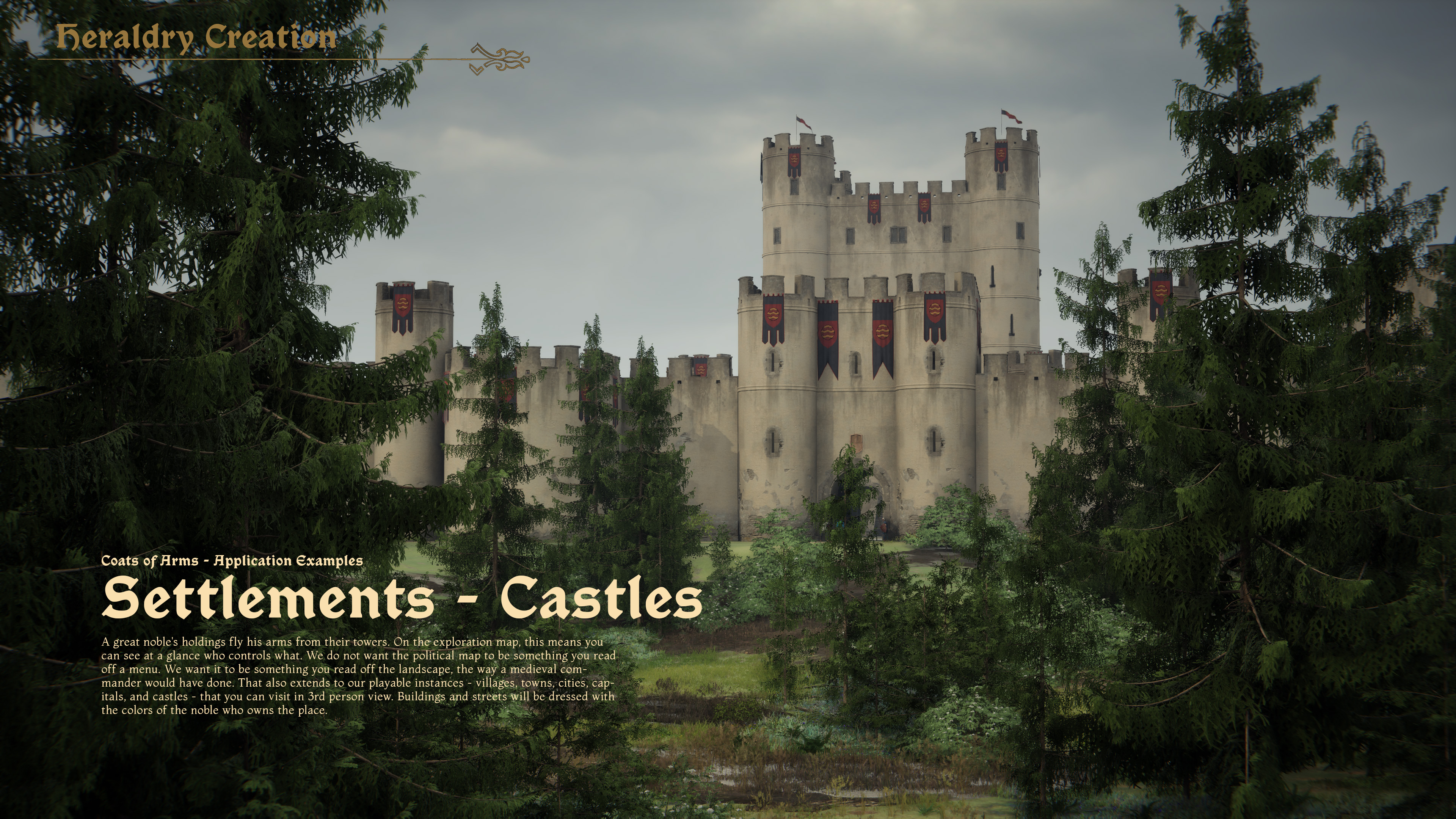
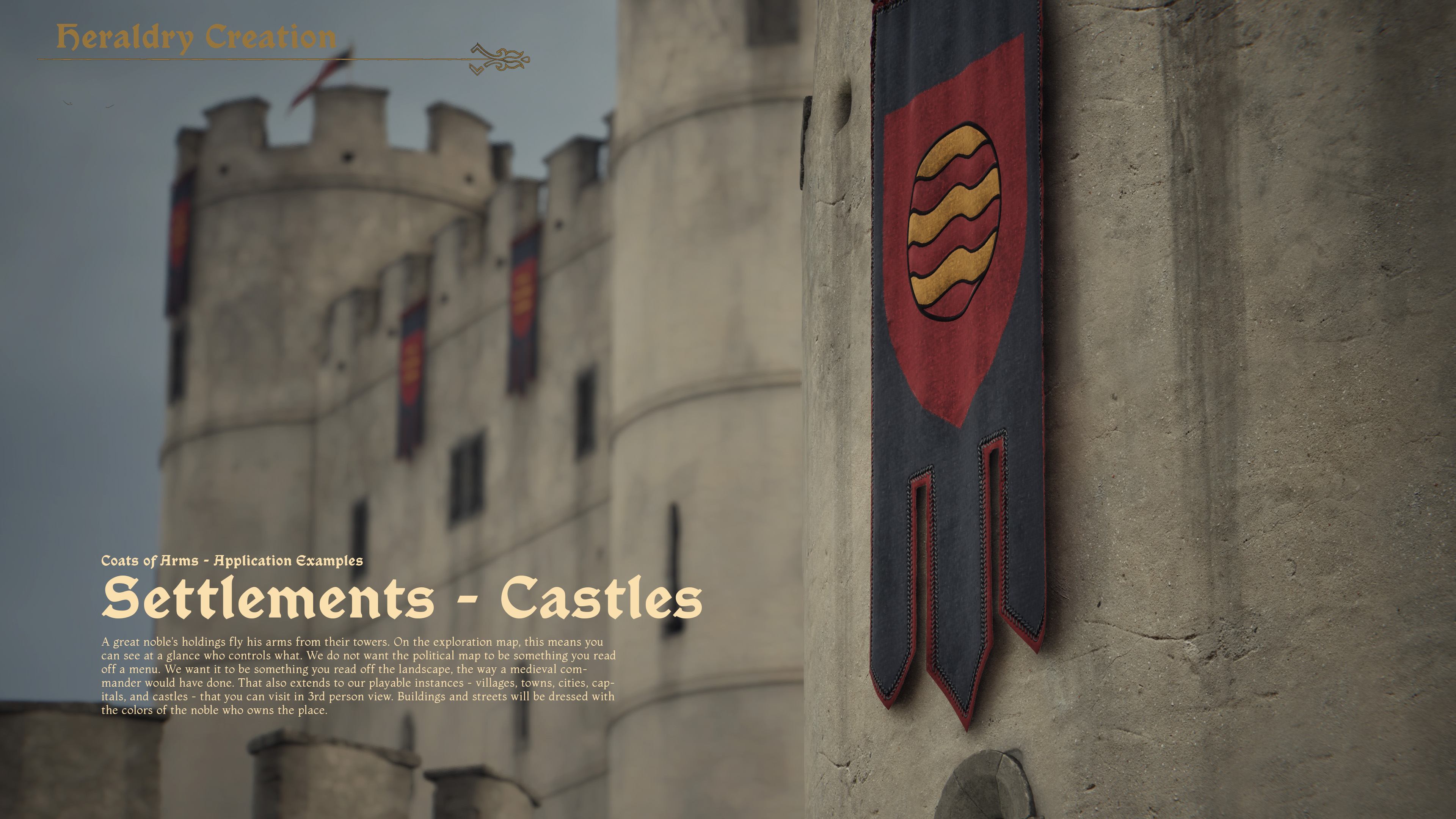
- In cities and castles - a great noble's holdings fly his arms from their towers. On the exploration map, this means you can see at a glance who controls what. We do not want the political map to be something you read off a menu. We want it to be something you read off the landscape, the way a medieval commander would have done. That also extends to our playable instances - villages, towns, cities, capitals, and castles - that you can visit in 3rd person view. Buildings and streets will be dressed with the colors of the noble who owns the place.
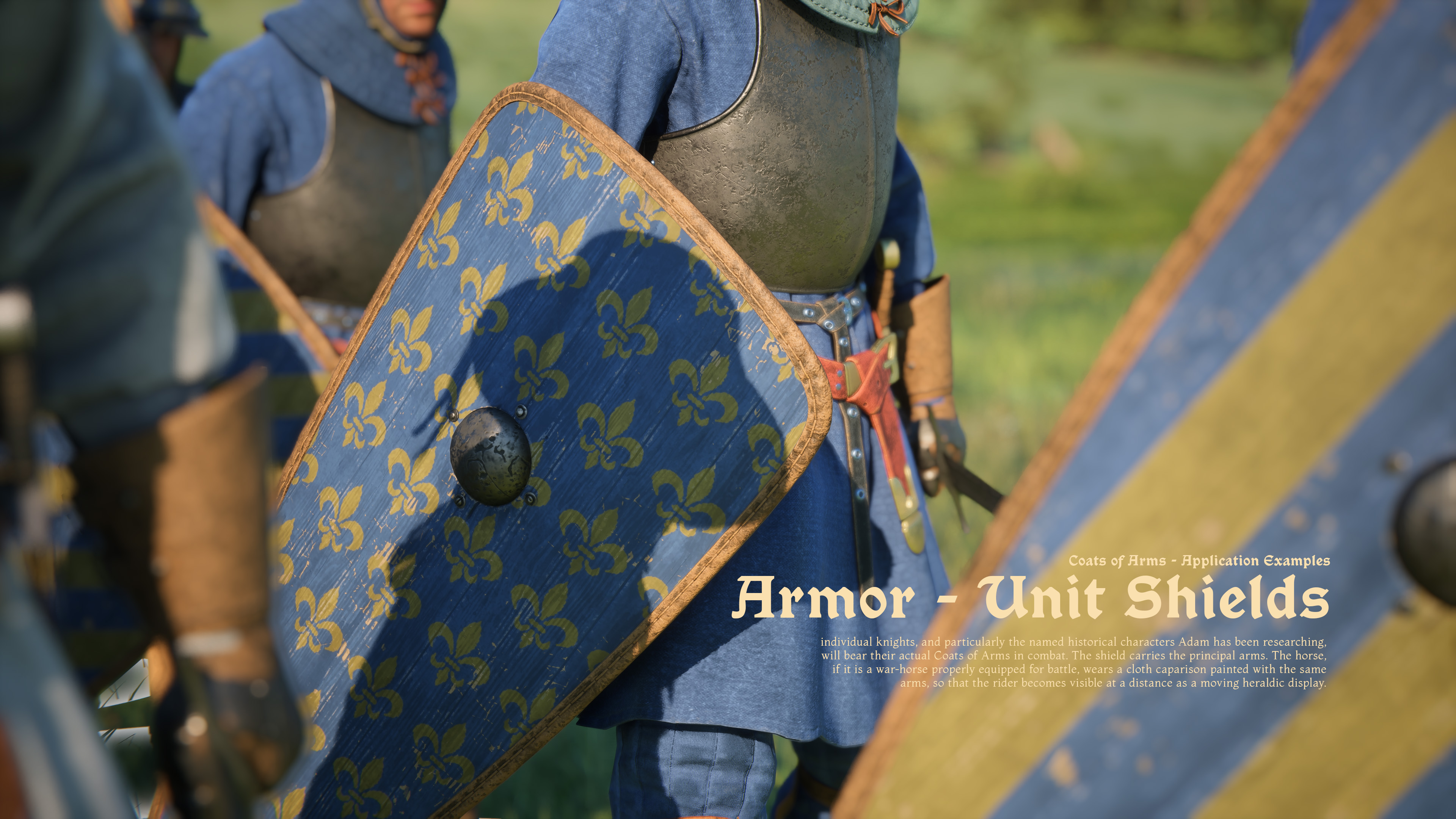
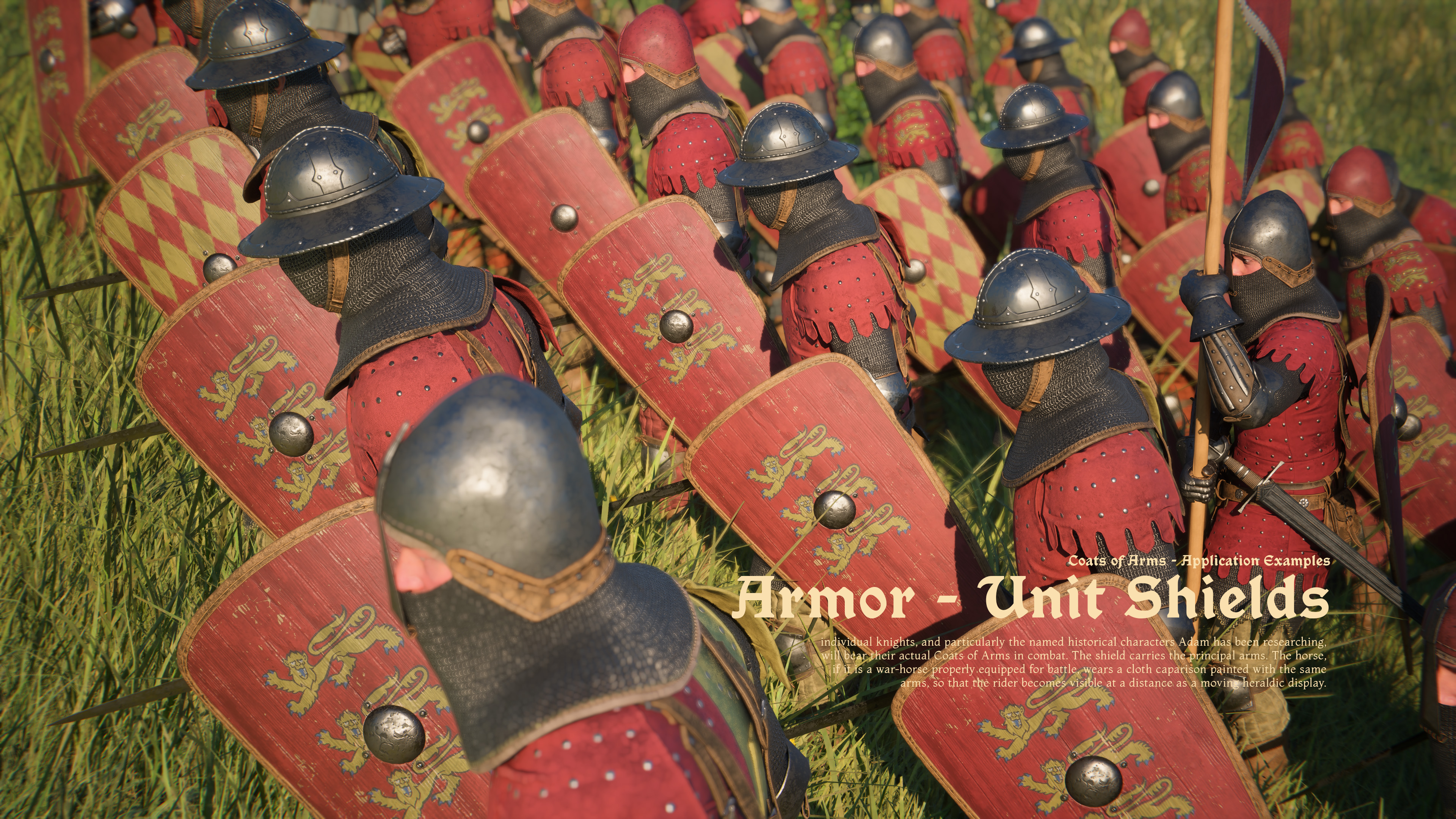
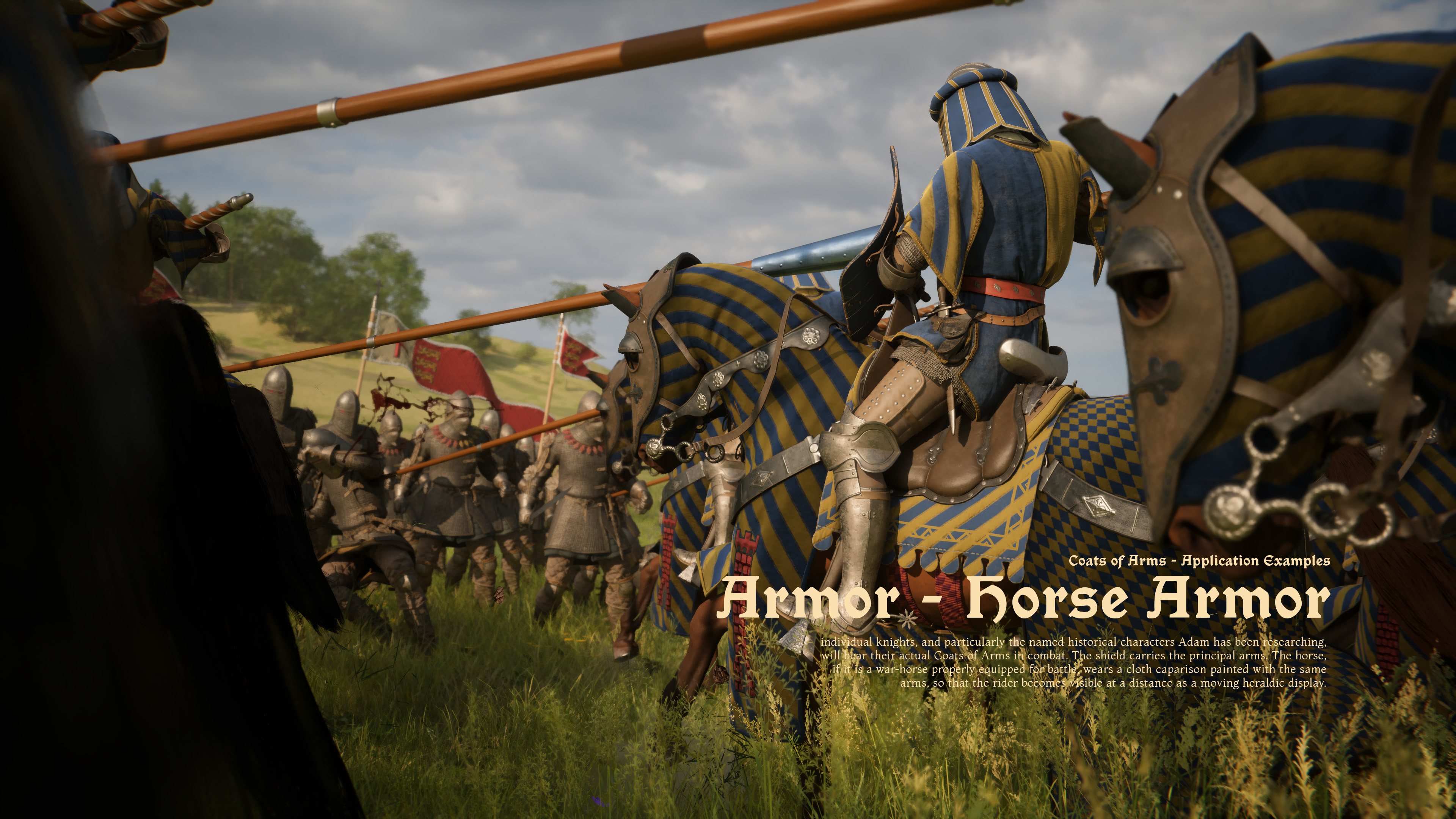
- Armor and shields - individual knights, and particularly the named historical characters Adam has been researching, will bear their actual Coats of Arms in combat. The shield carries the principal arms. The horse, if it is a war-horse properly equipped for battle, wears a cloth caparison painted with the same arms, so that the rider becomes visible at a distance as a moving heraldic display.
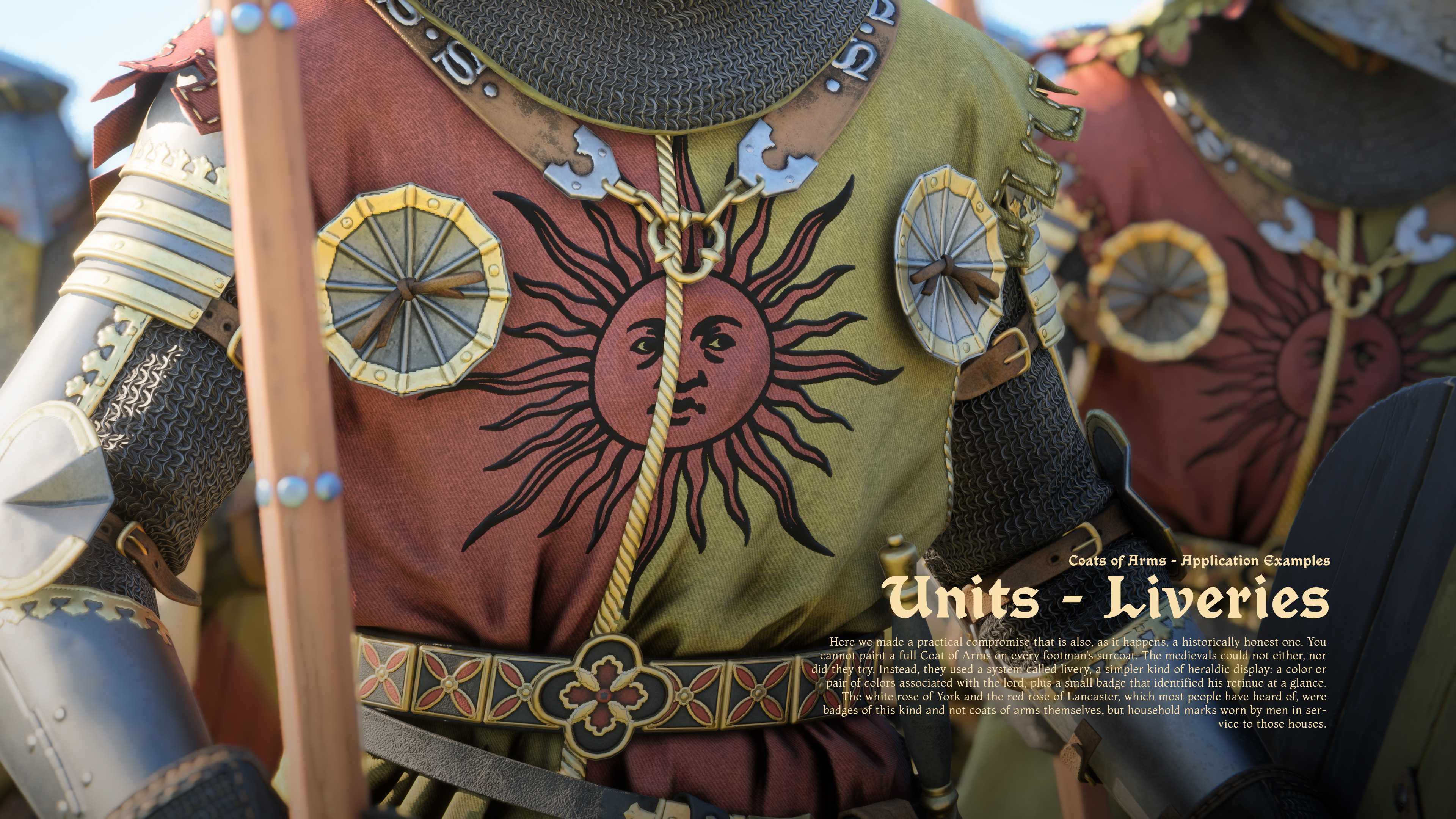
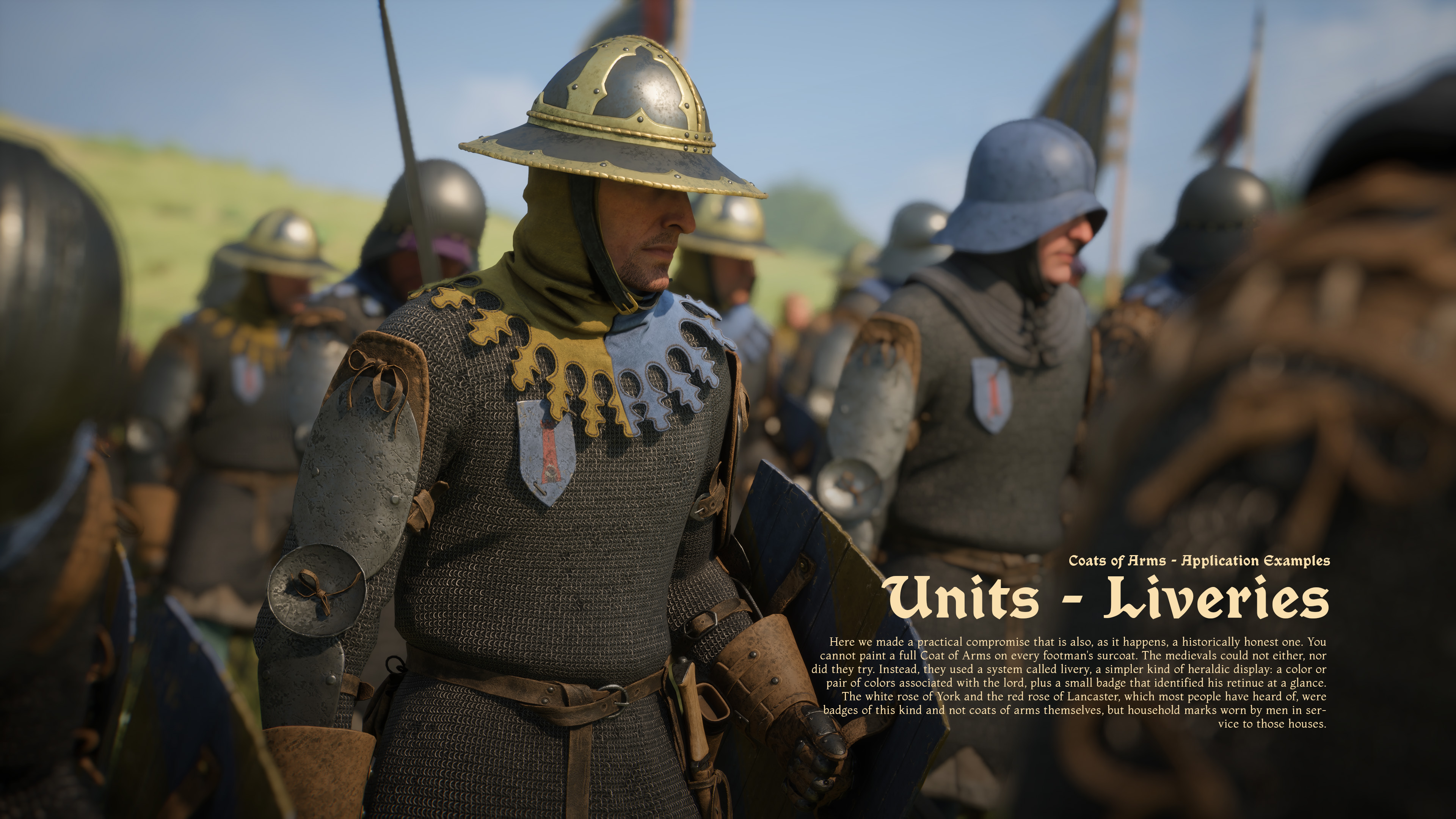
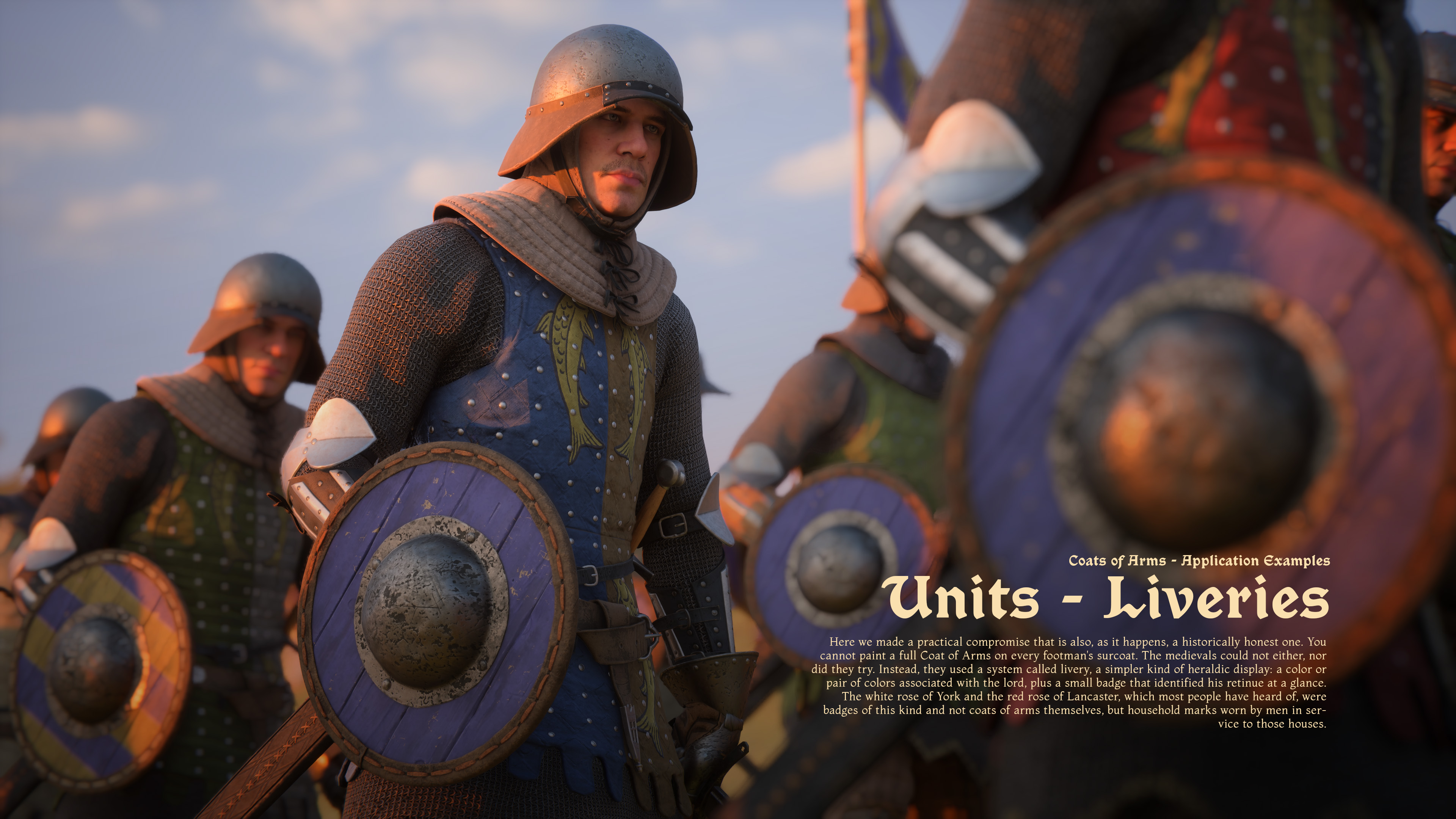
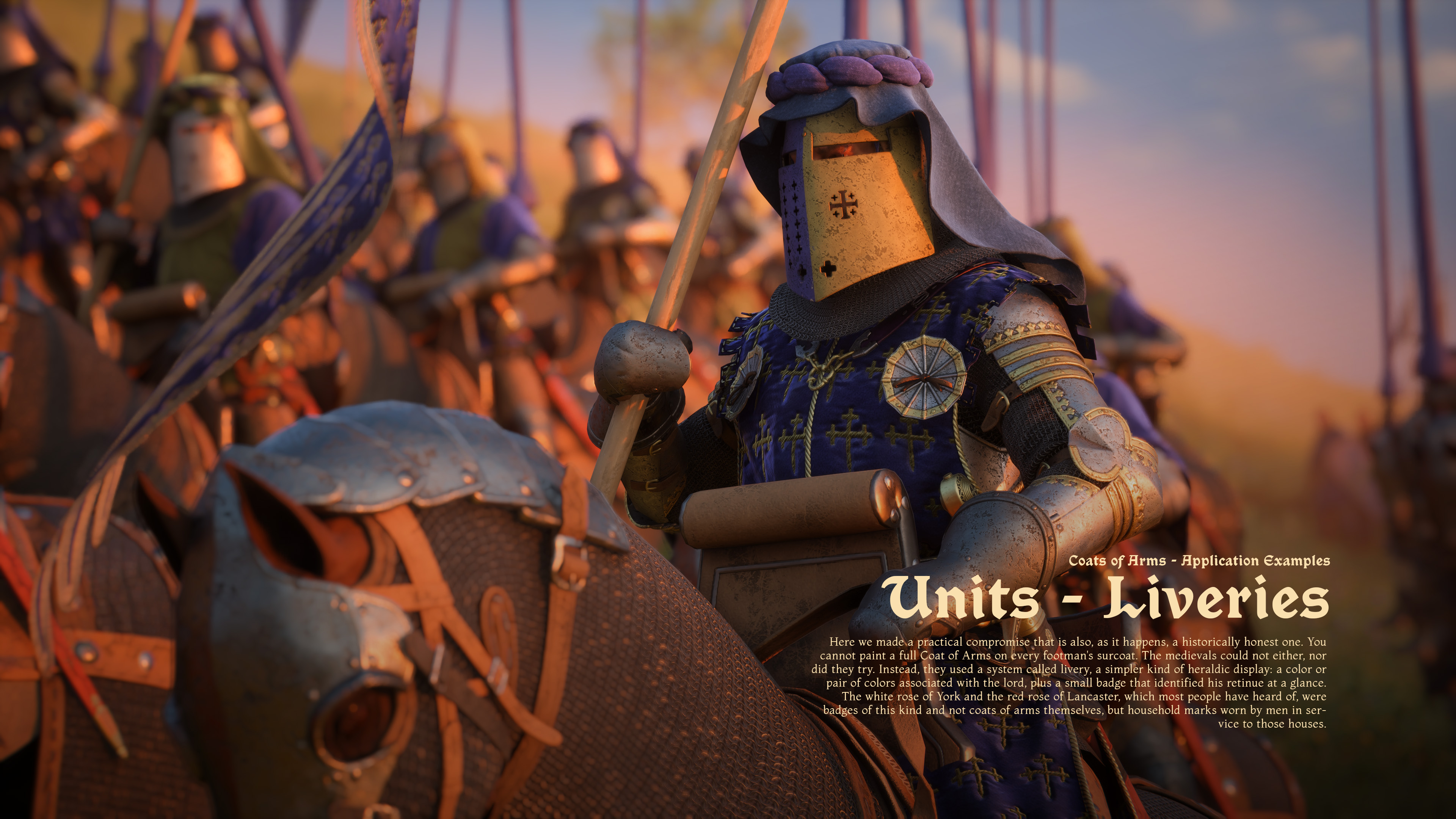
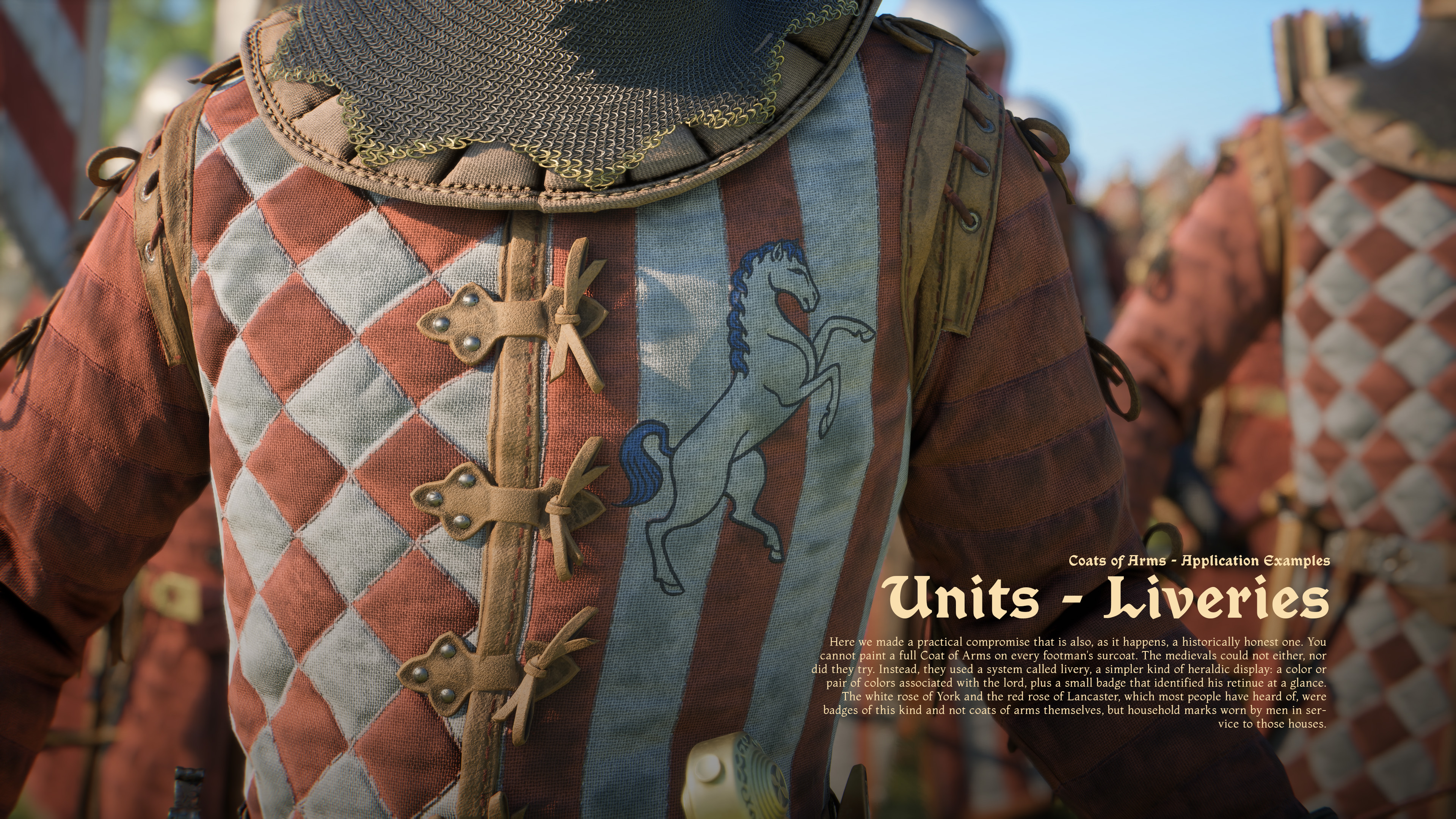
- Unit liveries - here we made a practical compromise that is also, as it happens, a historically honest one. You cannot paint a full Coat of Arms on every footman's surcoat. The medievals could not either, nor did they try. Instead, they used a system called livery, a simpler kind of heraldic display: a color or pair of colors associated with the lord, plus a small badge that identified his retinue at a glance. The white rose of York and the red rose of Lancaster, which most people have heard of, were badges of this kind and not coats of arms themselves, but household marks worn by men in service to those houses.
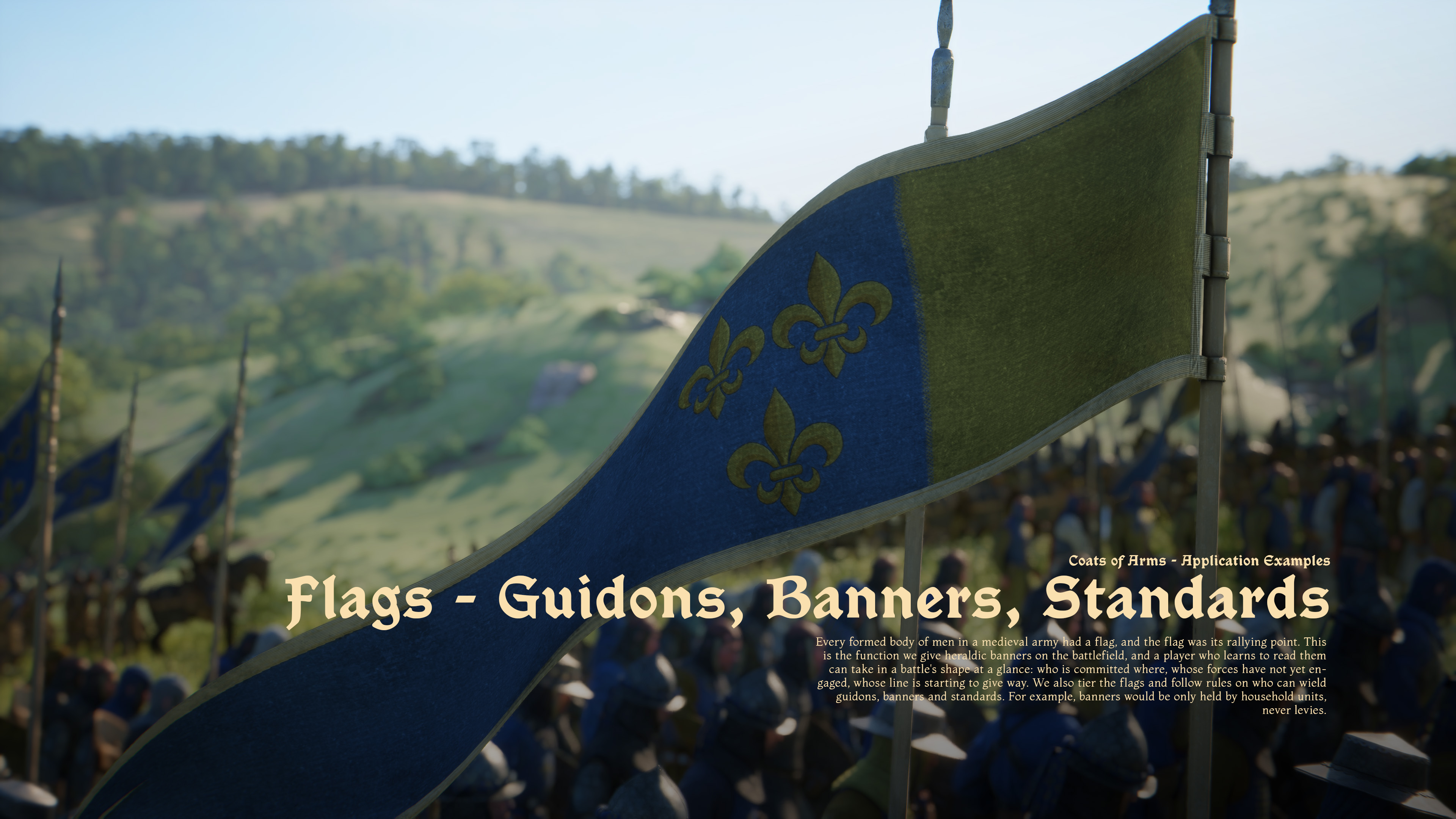
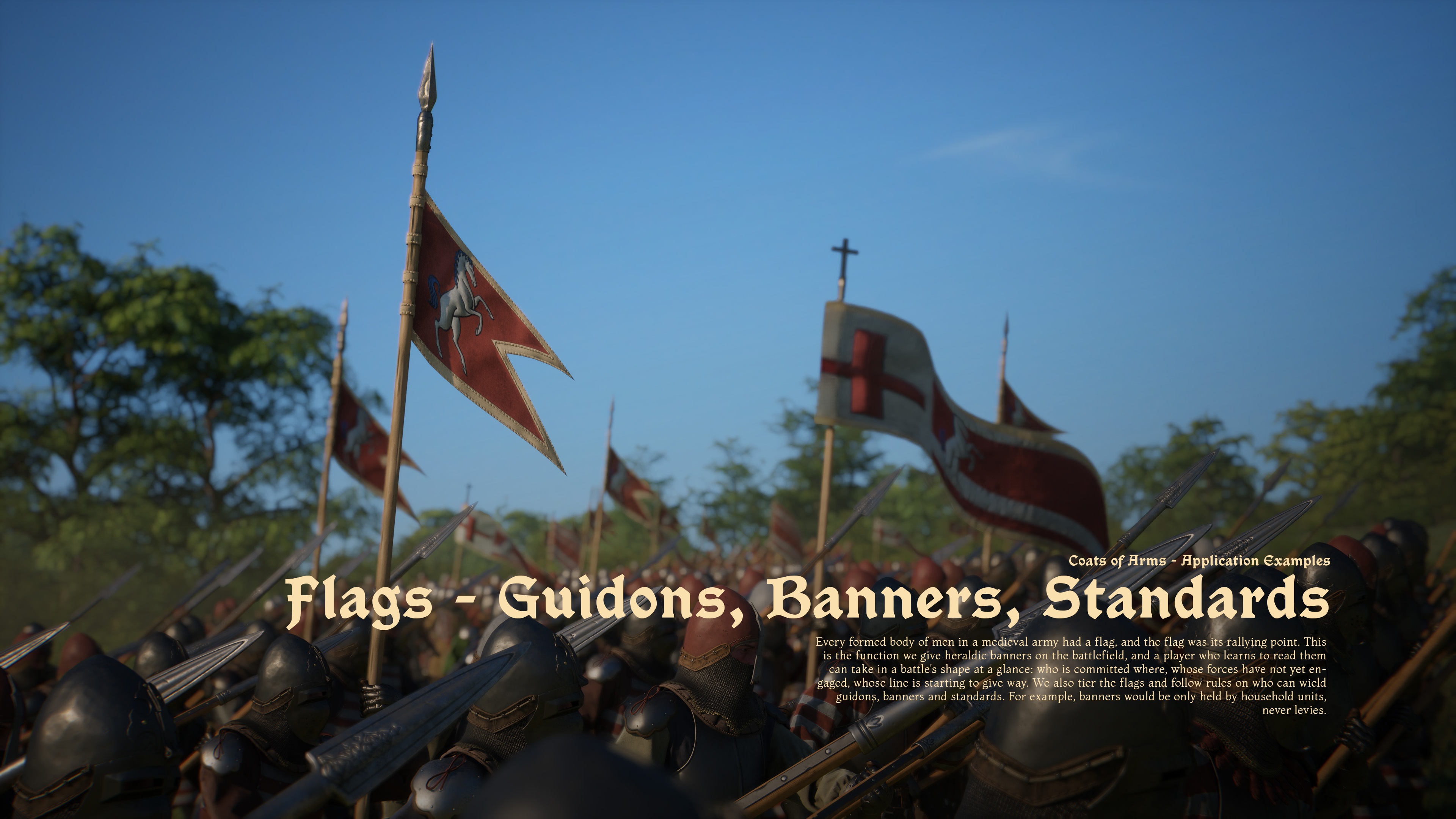
- Flags on battlefields - every formed body of men in a medieval army had a flag, and the flag was its rallying point. This is the function we give heraldic banners on the battlefield, and a player who learns to read them can take in a battle's shape at a glance: who is committed where, whose forces have not yet engaged, whose line is starting to give way. We also tier the flags and follow rules on who can wield guidons, banners and standards. For example, banners would be only held by household units, never levies.
Outro - closing thoughts
For a game about war, politics, and rising through medieval society, the Coat of Arms topic needed extra effort. Knowing who is who at a glance is not flavor. It is information, and information is power, and it has always separated a good commander from a bad one. When you see a banner crest the ridge in front of your army, you want to know who it belongs to. When you explore new areas on the Exploration Map, reading the coats of arms above settlements will allow you to quickly get your bearings of who is a friend or a foe, which is very important from a game design point of view..
That is why we cared enough to go to the College of Arms. But good design is also about making things accessible. None of this means you need to memorize blazons or learn the language of heraldry to enjoy Chronicles: Medieval. You can play the entire game without ever knowing what a tincture is, and we designed the visual system so the things heraldry tells you, the things you need to play well, are clear at a glance. You can even have the game generate a random coat of arms for you.
But as you play, you'll encounter more than a hundred real historical Coats of Arms in their proper context, attached to the people who actually bore them. You may find that the names and the colors start to mean something even if you never set out to learn them. That is how heraldry worked in the first place. People who lived alongside it picked it up without thinking, because it was useful to know whose banner was approaching. If you had fun playing the game and actually learned something in the process, we’d consider our job done well.
That is all for today. And as always, keep your vassals close (and memorize their Coat of Arms) and your lord closer (we hope you already memorized this one!).