Forging our combat system
The foundation of a compelling player experience
Hello everyone, seasonal greetings from our hall to yours!
Before the year comes to a close, we wanted to share one last small glimpse of Chronicles: Medieval with you. Think of it as a little end-of-year snack from the team, something to enjoy before we all step away for the holidays and gear up for what's up next. This update takes a look at the underlying structure of our combat system and the iterative process that guided its development.
When development began on Chronicles: Medieval, it was clear that combat would require careful iteration to get right. It has to feel rewarding every single time, whether you are engaged in a duel or fighting in a larger battle with hundreds of enemies around you. It should not only feel fun. We aim for something plausible and flexible enough to support a wide range of encounters, rewarding to master, and built from the ground up to be moddable.
Of course, that is easier said than done. Game development is constantly in motion, and we’ve gone through countless experiments, some that worked, and others that looked great on paper but didn’t feel quite right when put into practice. We are still moving things around, so treat this as a peek behind the curtain. Everything is still subject to change. But we still wanted to shed some light on the foundations we’re building stuff on.
Historically plausible, not Hollywood flashy
Medieval combat is often portrayed in exaggerated form in various media as elegant duels or endless sword-clanging. But in reality, as we stated in our previous FAQ, polearms ruled the medieval battlefield because their long reach, leverage, and diverse heads, like blades, hooks, spikes, and hammers, allowed troops to control space, stop cavalry charges, pierce or crush armor, and kill efficiently while keeping the enemy at a deadly distance. Knights carried swords as they had social, legal, and cultural meaning, but when facing heavily armoured opponents, the knightly pollaxe was a far more effective weapon. This perspective is rooted in HEMA, which draws directly from period sources rather than modern interpretation.
HEMA stands for Historical European Martial Arts, meaning combat based on historical sources, such as Medieval and Renaissance fencing manuals written between roughly the 14th and 15th centuries. Instead of relying on fantasy moves, HEMA uses authentic techniques taught by historical masters.
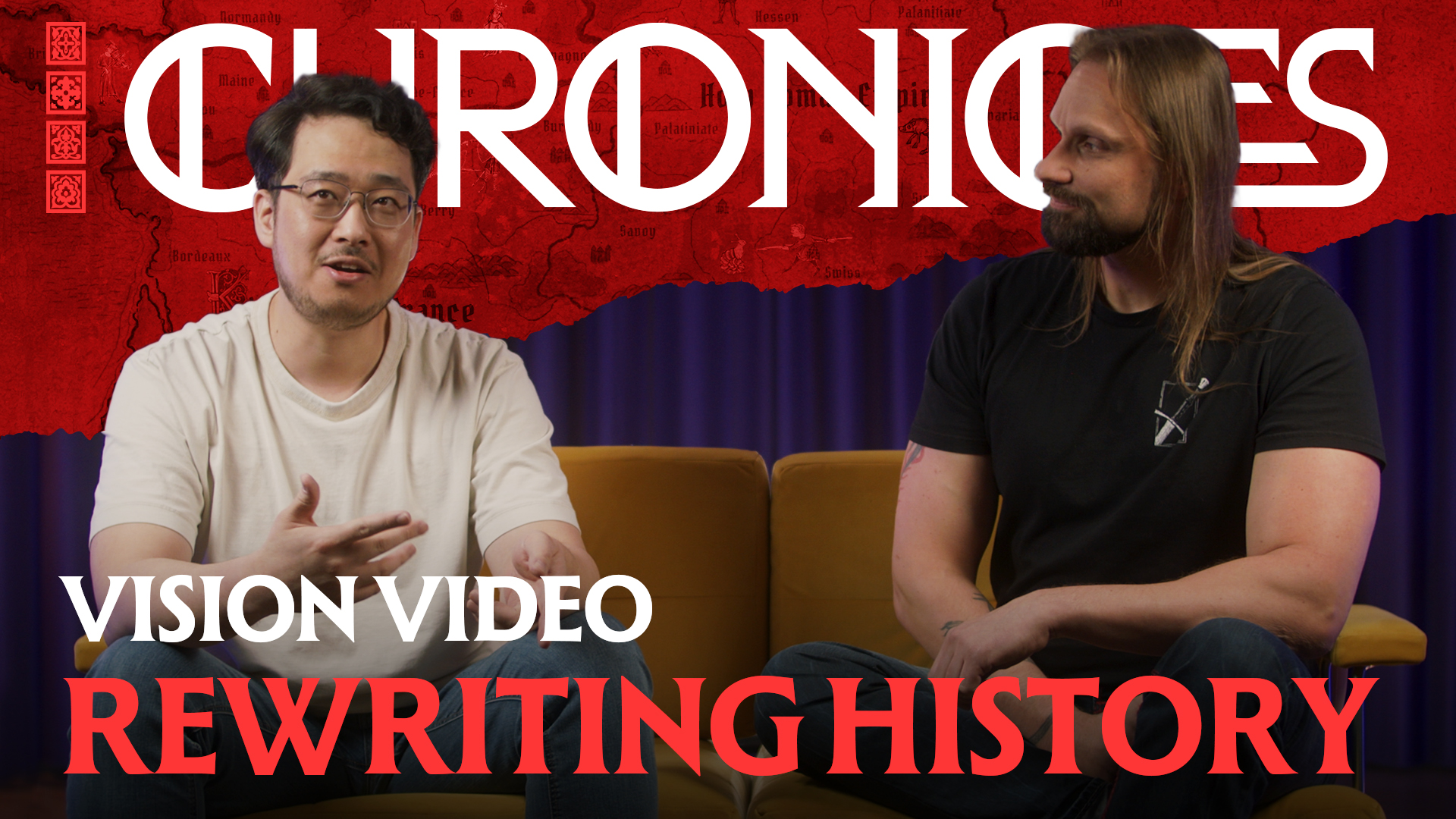
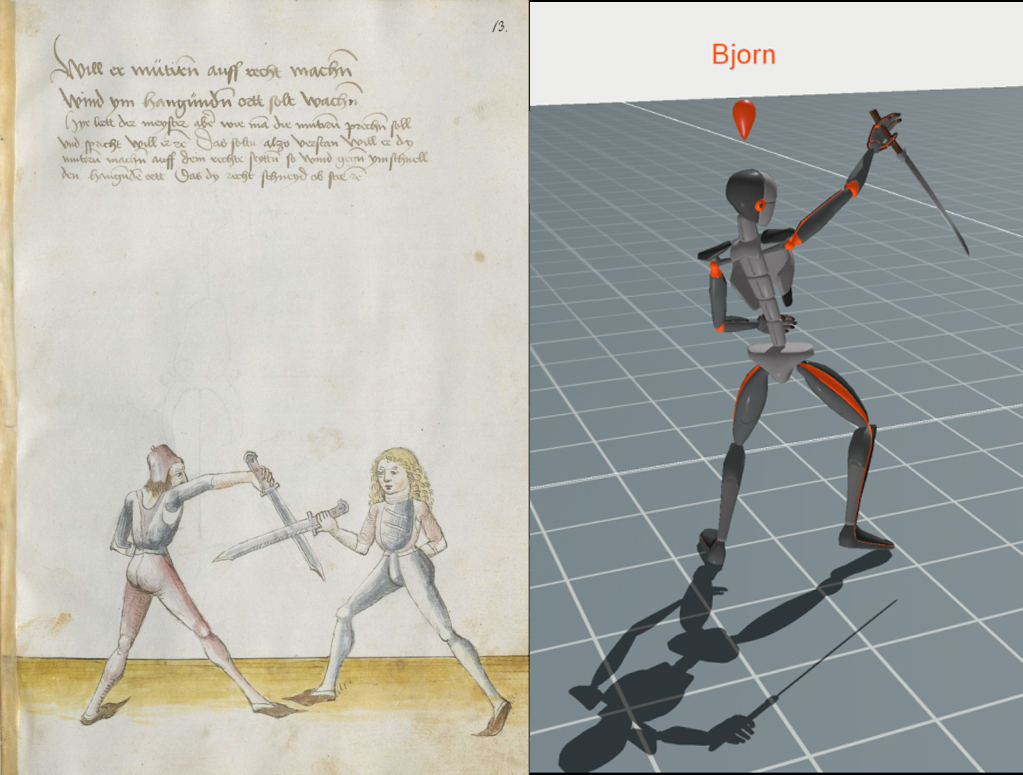
From the very beginning, Björn Rüther has been a constant part of our combat development. As our HEMA expert, he advises on historical fighting techniques, weapon behaviour, and battlefield use, and performs motion capture to bring those movements directly into the game. In the video below, he focuses on the pollaxe, explaining why it became such a valuable weapon from the 14th century onward and how it was used in combat. If you don’t know him already, you should totally check out his content!
For our game, drawing from these HEMA sources means that the combat system and animations are inspired by these original manuscripts, aiming to give players a sense of how real European swordfighting may have looked and felt: effective, tactical, and grounded in history.
Built for adaptability
Designing a combat system that performs across all scenarios required a focus on adaptability. The same mechanics that drive a duel also need to function when hundreds of characters collide on a big battlefield. That’s why we emphasized clear combat signals, consistent timing, and strong feedback, so players stay aware of what’s happening, even when chaos erupts around them.
That also meant moving in a different direction from the directional fighting system you might know from other games in the genre. During our research and internal play sessions it turned out that clarity, control, and consequence are more important than the freedom the directional system provides. Every swing should be readable. Every hit should tell you why it landed, and every decision should carry weight.
What differs us from what you might already know is our implementation of the variables we call “Energy” and “Posture” (naming is still subject to change, everything is WIP). Energy governs your endurance, how long you can attack, block, or move before fatigue sets in, while posture reflects your balance and stability when being challenged by the enemy. Lose too much of it, and a strong hit can stagger or break your guard and set you up for a nasty finishing move. One that you might have seen in our Vision Video back in June. Together, they form the rhythm of every fight: a dance of risk and reward that rewards timing, control, and composure.
Growth through practice
We want players to improve on two fronts: player skill and in-game character skill. Meaning that your personal timing, movement, and understanding of distance matter. But your character's perks unlocked on a skill tree also play a role. As you progress, you will unlock new weapon perks, advanced combos, and attacks designed for different purposes, some of which are more effective against armour or strong defenses. Fighting a levy or dueling against a seasoned knight with the same weapon will feel like two completely different experiences.
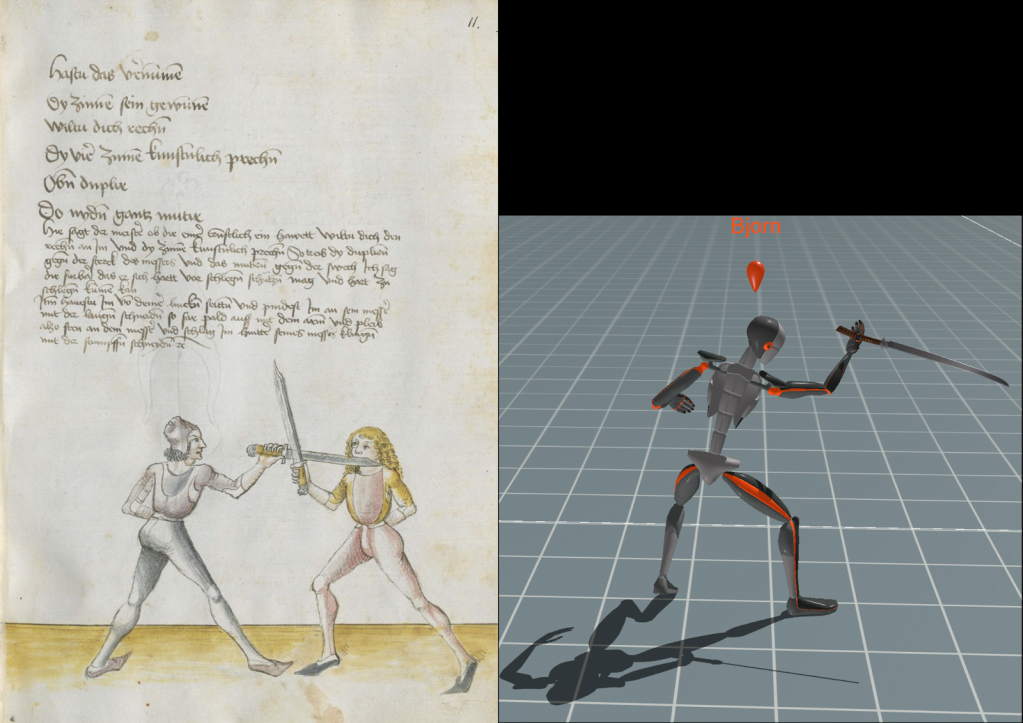
Check out those two examples of moves we recently captured with Bjorn for one-handed sword and its two veterancy levels (again, naming is subject to change). There’s a noticeable difference, not only in how many attacks you can chain together, but also in how fluent the character feels in handling the weapon.
Use the one-handed weapon a lot, and it will become an extension of your hand. You will be able to stagger enemies more easily with a chain of attacks. But in the beginning, you will have to work hard before winning your first tournament.
Every weapon category has its own progression path that increases the more you use it. While you progress in a path, you will earn small passive boosts, e.g., it could increase your damage a bit, in case of a melee weapon, or tighten your control over a bow.
But by leveling up your character overall, you will earn points to spend on perks in weapon category specialization trees, where the real variety begins. These perks unlock new techniques, from apprentice and journeyman moves to more advanced chains that expand a weapon’s rhythm and flow. They also include broader improvements that can make you more powerful or efficient overall, or give you better performance with higher-tier equipment. These help shape your character’s identity and give each weapon path its own flavor.
The medieval arsenal was vast, and we wanted each weapon type to have a reason to exist. Choosing what to bring to a tournament, siege, or a field battle should feel like real preparation, not just a cosmetic choice. A spear dominates in open ground, a mace comes into its own against heavy armour, and a longsword shines in versatility. Even during a siege, your weapon choices can depend on whether you’re assaulting or defending the walls.
Each weapon has its own role to play. No weapon is meant to dominate, and each has its advantages and drawbacks. This will encourage players to find the playstyle that best suits them.
We recently wrapped up work on some more weapon models that we didn’t show before. For all of you pixel hunters out there, here’s a small treat. How many new ones can you find?
The same principle applies to mounted combat. We merge the strength of the horse with the skill of the rider, turning every charge into a moment of tension and precision. Each lance behaves differently depending on its quality; some lower smoothly into a couching position, others feel heavier and more sluggish. Your character’s proficiency refines those values, improving how quickly the lance can be readied, how steady it remains, and how easily you can adjust aim mid-charge. Here are some of our experiments in timing around lance controls, which we are also researching with Björn.
But horses are characters of their own! Every horse has its own characteristics: top speed, turn rate, health, and even the power to trample your opponents. We are currently developing a complete locomotion set that will be responsive and blend naturally between states. Still ironing out the kinks, but we wanted to share an early look.
Lessons from iteration
Our early prototypes relied on a historically inspired combat system built around complex combos and detailed stance transitions. And yes, we looked into the directional combat approach, too. It looked impressive, but as soon as multiple enemies entered the fight, the overall experience quickly became unwieldy and not well-suited for those scenarios. In late 2024, we evolved the approach toward greater clarity, readability, and consistency. Still grounded in historical influences, but more manageable and accessible in practice.
Since then, we have refined how weapons feel and behave, tightened posture and stamina mechanics, and expanded the same design principles to ranged and mounted combat. Each iteration has brought us closer to a system that’s deep enough to reward mastery, but intuitive enough to pick up and enjoy. The idea is to have a less steep learning curve without sacrificing depth. It’s a tough thing to do, that’s why it’s taking us so long to make it work.
Preparing the right armory
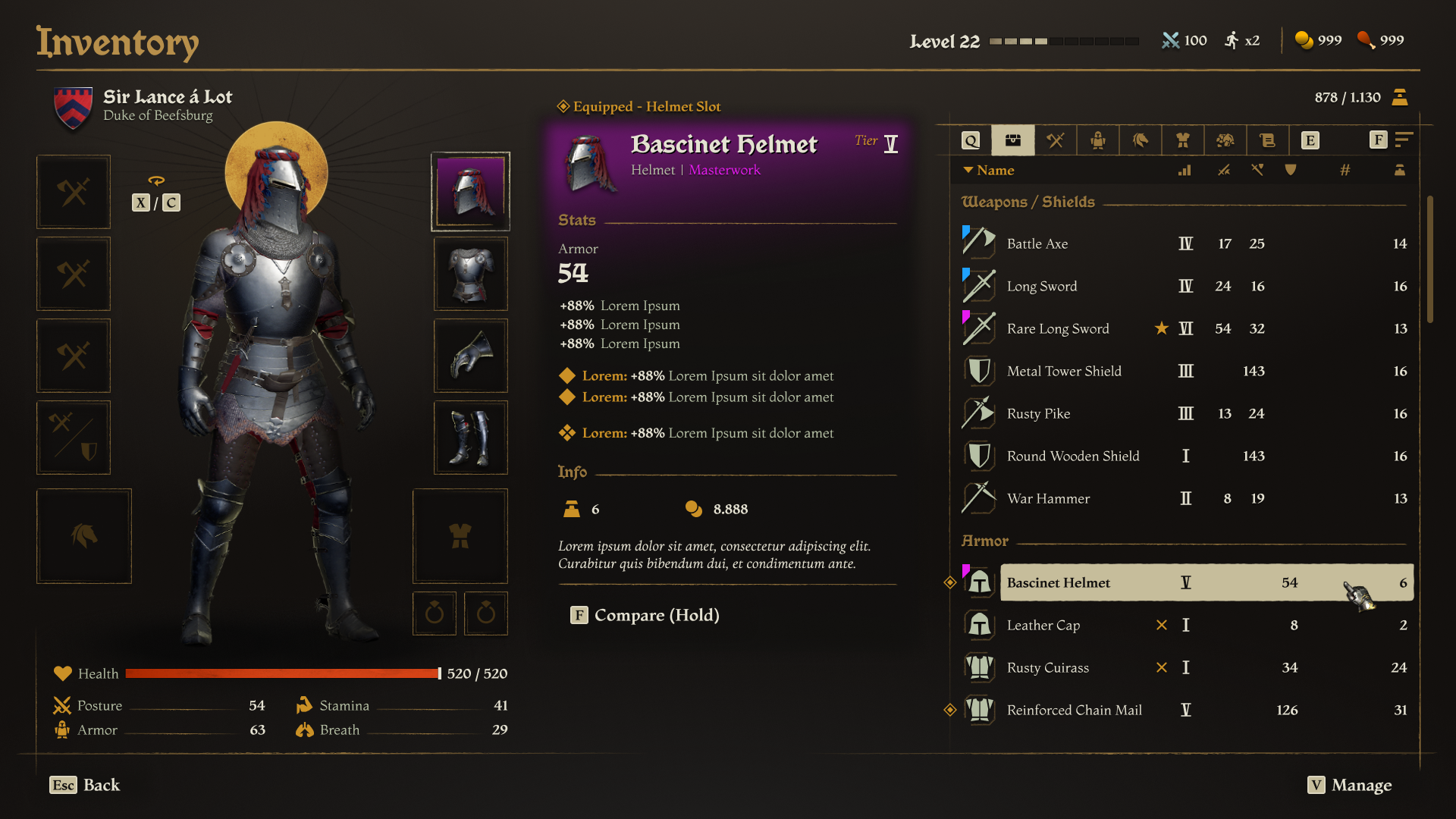
What you bring into a fight matters just as much as how you fight. You can carry up to four pieces of equipment and swap between them freely during battle. This creates meaningful decisions before every engagement: whether to bring a spear for reach, a bow for ranged pressure, a sword for tight spaces, or a mace for armoured opponents. Your mastery progression naturally informs these choices, shaping the loadouts you rely on as your character develops.
We are hard at work on our inventory system, and below you will find a first look at one of the designs we’re cooking (did we mention that everything you see here is WIP? Well, so is this inventory design screen).
Looking ahead
We keep saying it, but we really mean it - we cannot wait to show you how it all works together on a big battlefield. Since these systems are still evolving, we’re pairing early looks with detailed write-ups to provide the right context. We were debating whether sharing the raw (no pun intended) motion capture recordings is not peeling the curtain too much, but we decided that you will be able to squint a little and see where we are going with this, even though it is far from finished for now. We are perfectly aware of that. Like that strap disconnecting from the saddle here on the horse locomotion video:
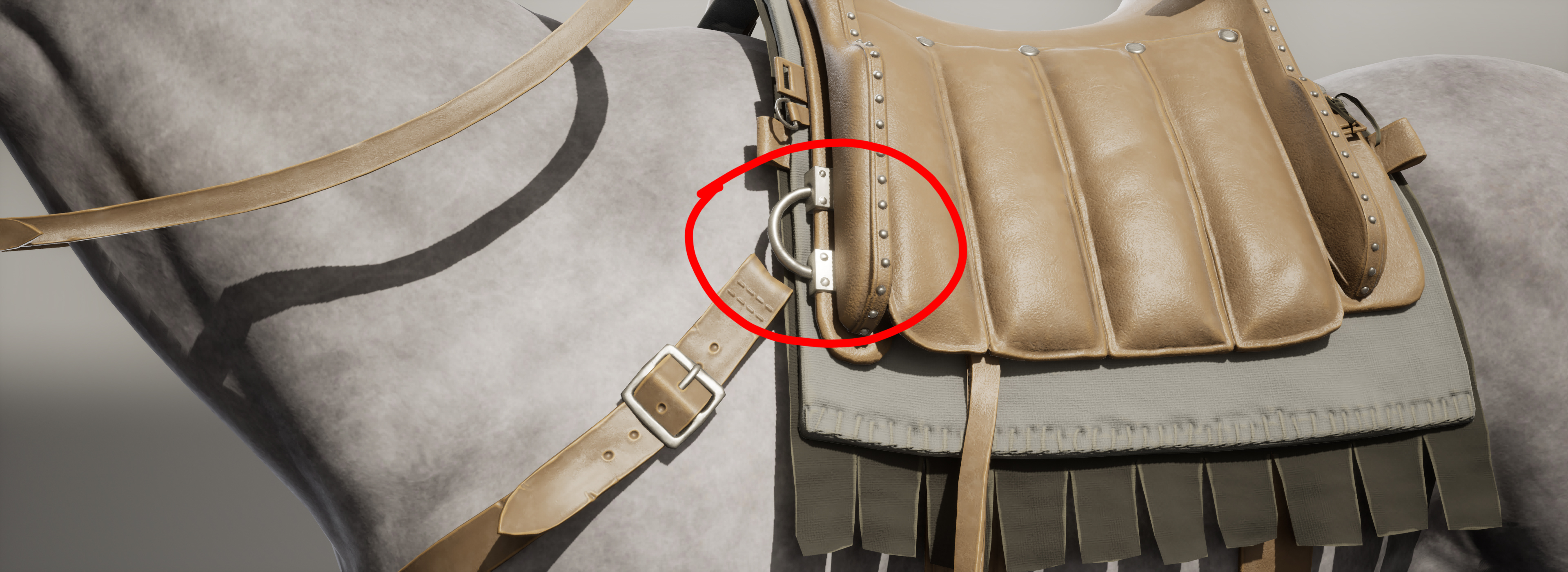
It is an easy skinning fix. But it is the Holiday season, so we have that bugged in Jira for early next year. Rather than waiting until everything is polished, we wanted to share this small update with you before the holidays. We would love to hear if you enjoy seeing more work-in-progress moments like this!.
That being said, have a wonderful Holiday break, and we will see you in 2026!
.jpg)